Meme coin trading works when you treat narratives and exits as a system rather than a lottery ticket
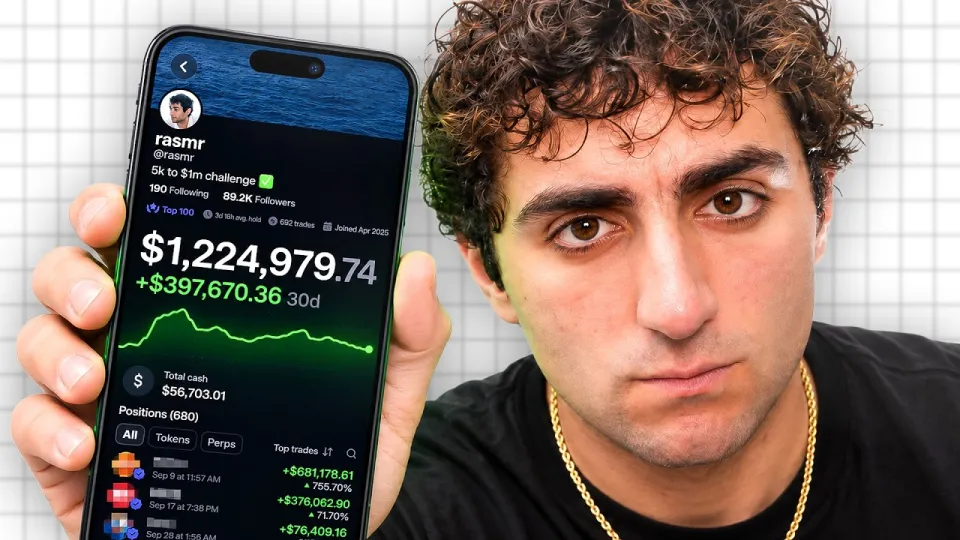
Video: 5 Years of Memecoin Knowledge in 12 Minutes
You can order the same kind of articles for your own video to boost it on YouTube and Google. Just message the Telegram bot @sat_sit_bot. The bot writes and publishes the articles itself (with your YouTube video embedded) on popular topical websites (no ads). Try it free: 50 articles on us.
· based on the channel rasmr
A meme coin is a cryptocurrency whose value rests almost entirely on narrative, community attention and timing rather than on revenue or utility, which is why trading it is a discipline problem more than an analysis problem. The traders who survive multiple cycles treat every position as a trade with a defined exit, not as an investment held on hope. If you want to trade these launches with a real order book behind you, you can open an account on fomo and follow the flow instead of guessing.
What a meme coin actually is and why it moves so fast
A meme coin has no cash flow to discount, so price is set by the marginal buyer's belief about the next buyer. That single fact explains the speed of both rallies and collapses: there is no valuation floor to slow the move down. Supply is usually concentrated in a small number of wallets at launch, liquidity is thin, and a handful of large sellers can reprice the whole chart in minutes.
The practical consequence is that you are trading attention, not technology. When a narrative is fresh — a new meta, a celebrity, a cultural moment, a trending AI angle — money arrives quickly because the story is easy to repeat. When the story gets old, the same money leaves just as fast. Five years of watching these cycles produces one consistent lesson: the coin is rarely the point, the timing of the crowd is.
The four things that decide whether a launch is worth your money
Before any entry, a meme coin trade should pass four filters, and each one is answerable in a few minutes of research.
- Narrative. Is there a story people can retell in one sentence, and is it early or already saturated? A tired meta with a fresh ticker is still a tired meta.
- Launcher and insiders. Who deployed the token, who was in before the public, and how much of supply sits in a few wallets? Anonymous launches with clustered early buys are the standard rug setup.
- Liquidity and holder distribution. Thin liquidity with a top-heavy holder list means your exit is someone else's decision, not yours.
- Market cap room. Where is the coin now relative to the caps similar narratives reached before? That gap is your realistic upside, and it is usually smaller than the chart suggests.
Why emotions cost more than bad picks
The most expensive mistake in meme coin trading is not choosing the wrong token — it is staying in the right one too long or averaging down into the wrong one. The pattern is well documented by traders themselves: a position goes up 50–100%, the holder gets greedy, the chart round-trips to breakeven, and a winning trade becomes a loss. The mirror image is refusing to accept a loss and waiting for the chart to come back, which turns a small cut into a large one.
Two rules fix most of this. First, decide the exit before entry: a target where you sell part of the position, and a level where you admit the thesis is dead. Second, size positions so that being wrong is boring. If a single loss can change your month, the position is too big regardless of how good the narrative looks.
How to plan an exit around market cap, not just the chart
Market cap is the more honest number in meme coin trading because it tells you how much money has to arrive to double. A $1 million cap needs $1 million of new buying to reach $2 million; a $100 million cap needs $100 million. That asymmetry is why early entries pay and late entries usually do not.
A workable approach is to set cap-based targets in advance — for example, taking initial capital off at the first meaningful milestone and letting a smaller remainder run — and to watch holder growth and volume rather than candle colour. When the narrative is everywhere and the cap has already multiplied several times, the buyers left are the ones you would be selling to.
Reading the launch: who is behind the token and who knew first
Knowing who released a token and who was positioned before the announcement is the fastest rug filter available. Tight, well-connected groups around a launch routinely know about a coin before the public does, which is exactly why they sell into the first wave of outside buyers. You do not need to be inside such a circle to use the information — you need to recognise its footprint: identical early buys, coordinated promotion, and a supply chart that funnels into a few addresses.
If you cannot identify the launcher or explain why the token exists today, the honest answer is that you are the exit liquidity. Skipping those launches is not missed opportunity; it is the trade.
Common questions traders ask before their first position
Beginners tend to ask the same things: how much capital to start with, whether a themed coin tied to a big upcoming release is a good investment, and how to tell a rug from a genuine run. The short answers are: start small enough that a total loss changes nothing, treat any theme coin as a narrative trade with a short half-life rather than a long-term holding, and judge rug risk by launcher identity and holder concentration rather than by how friendly the community looks.
The recurring theme in trader discussions is that the technical part is learnable in weeks, while the behavioural part takes cycles. Journaling entries and exits, including the reason for each, is the cheapest way to shorten that learning curve.
Useful links
- Trade meme coin launches on fomo — registration and platform access.
- Join the Catalyst trading group on Discord — discussion and trade ideas.
The takeaway
Meme coin trading rewards process over prediction: a clear narrative, a known launcher, a realistic market cap target and a pre-written exit beat any amount of chart staring. The traders who lose are usually not wrong about the coin — they are undisciplined about the position, letting a green trade round-trip or a red one run. Treat every launch as a trade with a defined risk, and the occasional 100x becomes a bonus rather than the plan. The breakdown behind these lessons comes from the rasmr channel, which condensed five years of meme coin experience into a twelve-minute walkthrough worth watching alongside this guide.
Before you take a position, register on fomo through this link so your first meme coin trade runs through a platform built for fast execution.
Key takeaways
- Meme coin prices are driven by narrative and attention, not by fundamentals or revenue.
- Most retail losses come from round-tripping profits and refusing to cut a losing position.
- Market cap levels, not chart shapes alone, tell you where early buyers usually start selling.
- Knowing who launched a token and why is the fastest filter for a rug-pull risk.
- Position sizing and a written exit plan matter more than picking the next 100x.
Source: 5 Years of Memecoin Knowledge in 12 Minutes · Markdown version
Questions & answers
What makes a meme coin different from other cryptocurrencies?
A meme coin has no revenue or protocol utility to value it, so price depends on narrative and the flow of new buyers. That makes moves faster in both directions and makes exit planning more important than long-term thesis building. Supply concentration and thin liquidity amplify the effect.
How do I avoid round-tripping a profitable meme coin trade?
Decide your sell levels before you enter, including a point where you take back your initial capital, and execute them mechanically. Traders consistently report losing gains by holding for more after a 50–100% move and watching the chart return to breakeven. Partial exits remove the decision from the emotional moment.
Is a coin tied to a big upcoming release, like a game launch, a good investment?
Treat it as a narrative trade with a defined window rather than a long-term investment. The attention spike around a release is real, but it is usually priced in before the event and fades afterwards. Size it like any other meme coin position and plan the exit in advance.
How can I tell whether a new launch is likely to rug?
Look at who deployed the token, whether a small cluster of wallets bought before the public, and how concentrated supply is. Coordinated promotion plus clustered early buys and thin liquidity is the standard rug footprint. If you cannot identify the launcher, assume you are the exit liquidity and skip it.